
Why baiting suits so many Inner West homes
Not every house can have a trench dug around it. In Williamstown and Newport, heritage bluestone paths and tiled verandahs run hard against the walls. In Ascot Vale and Moonee Ponds, Edwardian homes sit shoulder to shoulder with a neighbour’s fence a metre from the side wall. Across Maidstone and Braybrook, townhouse infill from the 1990s and 2000s shares party walls and has courtyards paved edge to edge. On all of these blocks a treated zone means heavy drilling, awkward neighbour negotiations, or both.
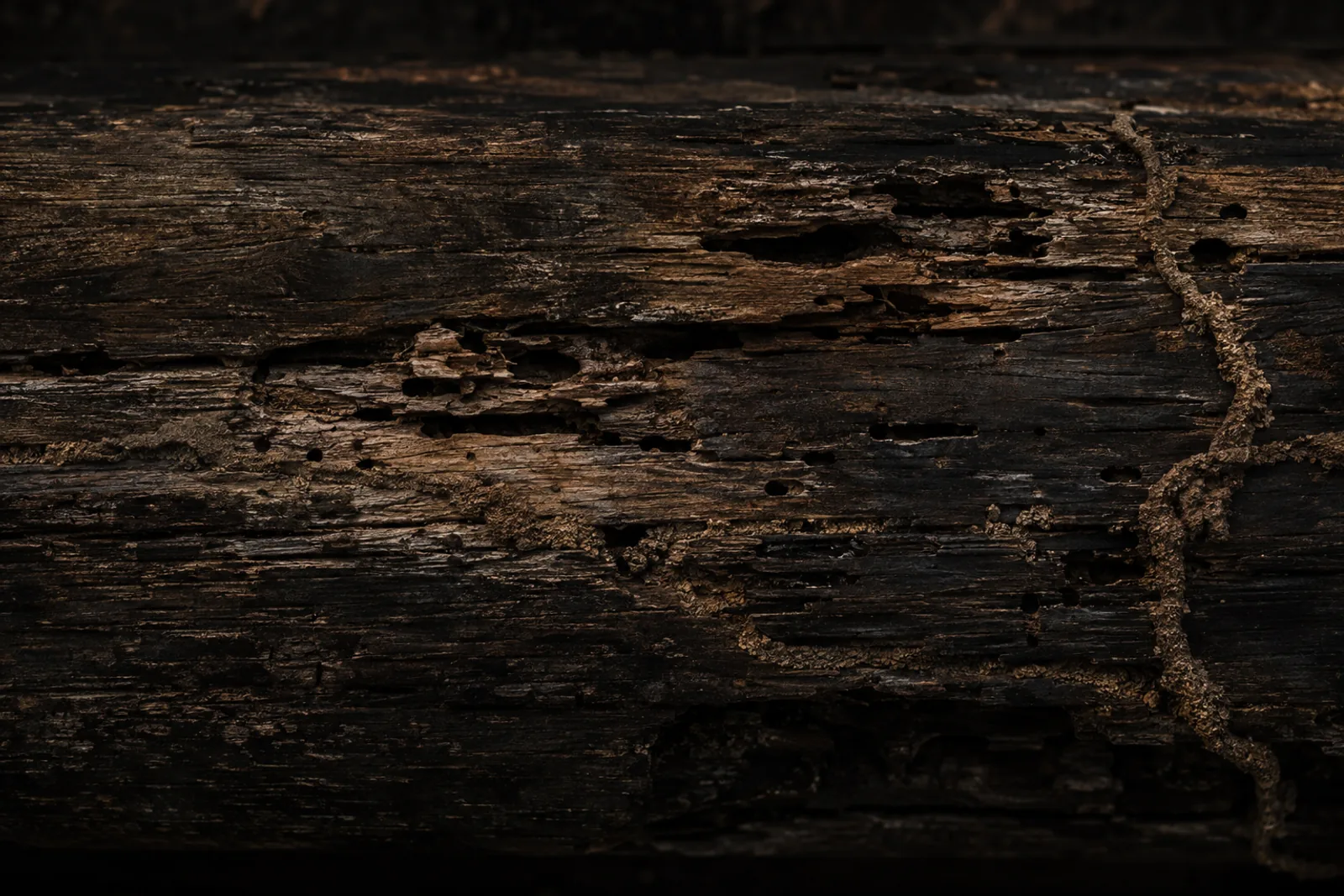
A termite baiting system takes a different approach. Instead of trying to seal the soil, it uses the termites’ own behaviour against them. Subterranean termites, mainly Coptotermes acinaciformis in Melbourne, forage constantly through the top layer of soil looking for cellulose. Put an attractive food source in their path, let them find it and feed, then quietly swap that food for a slow-acting bait. The workers carry it home, and the colony that was attacking your house is eliminated from the inside.
Baiting is a recognised method under AS 3660.2, the standard for termite management in existing buildings, and it is often the least disruptive way to deal with white ants on a block where the nest cannot be found or reached.
How the system is set up
Finding the activity first
A baiting program begins with a thorough termite inspection. We are looking for live workings inside the house, for evidence of foraging around the perimeter, and for likely nest sites: the base of a big river red gum, a rotting stump, a timber retaining wall against the clay, a pile of old sleepers.
In-ground stations
In-ground stations are set into the soil around the perimeter at regular spacings, closer together on the side facing the likely nest or where the soil is most attractive, such as along a garden bed with drip irrigation. Each station holds a timber or cellulose attractant and is capped flush with the ground so it can be mowed over. Where the perimeter is concrete, stations can be cored into the slab or path rather than the soil.
Above-ground boxes
Where termites are already feeding inside the house, an above-ground bait box is fitted directly over the workings, on a skirting board, a door frame, a subfloor bearer or a window reveal. This is the fastest route to the colony because the termites are already there and already eating. The box is sealed against the timber so the workings stay dark and humid and the termites move straight from the gallery into the bait. Nothing is sprayed and the workings are barely disturbed.
The bait itself
The bait is a cellulose matrix carrying a chitin synthesis inhibitor. Termites cannot detect it as a threat, so it is eaten and shared freely. Because the inhibitor only takes effect when a termite moults, the workers that carry it back to the nest are still alive and feeding for long enough to spread it widely. Over the following weeks the colony loses its ability to replace workers, the soldiers and reproductives starve, and the nest collapses. This is colony elimination rather than a repellent, and it is the reason baiting can deal with a nest that is on a neighbour’s land or under a slab you cannot get to.
What the program looks like over time
Baiting is a process, not a single visit. After installation we return on a set schedule to open each station, record any interceptions, top up or replace bait, and photograph what we find. When we are satisfied that the colony is gone, we confirm it in writing.
At that point you have a choice. The stations can be removed, or, as we generally recommend, they stay in place with plain attractant inside as a monitoring line. Any new colony that forages towards the house from the creek reserve, the railway corridor or the neighbour’s gum tree is likely to hit a station before it hits your timber, and the check schedule catches it. Pairing that monitoring with an annual termite inspection of the house itself gives you two independent lines of detection.
Where the block allows it, some owners add a treated zone on the accessible sides after elimination so the house is protected continuously while the stations keep watch. We will not push soil treatment where baiting alone is doing the job.
Local conditions that affect baiting
The clay soils across the west hold moisture, which keeps termites foraging near the surface for much of the year and makes in-ground stations easy for them to find. The trade-off is that very wet ground can waterlog a station in winter, so placement and drainage matter more here than on sandy soils. Mature eucalypts along the Maribyrnong River, in Footscray Park and in the older streets of Moonee Ponds are the most common nest sites we trace foraging back to, and stations on the side of the house facing them are typically the first to be hit.
Older weatherboards with poor subfloor ventilation are a particular focus. Damp, dark subfloors are ideal termite habitat, and above-ground boxes on bearers and joists under the house are often the quickest way into a colony that is feeding on the frame. Improving ventilation and fixing leaks at the same time makes the house less attractive once the current colony is gone.
Getting started
If you have live termites and want them dealt with without trenching your garden or drilling your verandah, a baiting program is worth discussing. It starts with an inspection and a station plan, and our technicians hold the licensing Victoria requires for pest management. Contact us for a free quote and we will tell you whether baiting, a termite barrier, or both is the right fit for your house.