
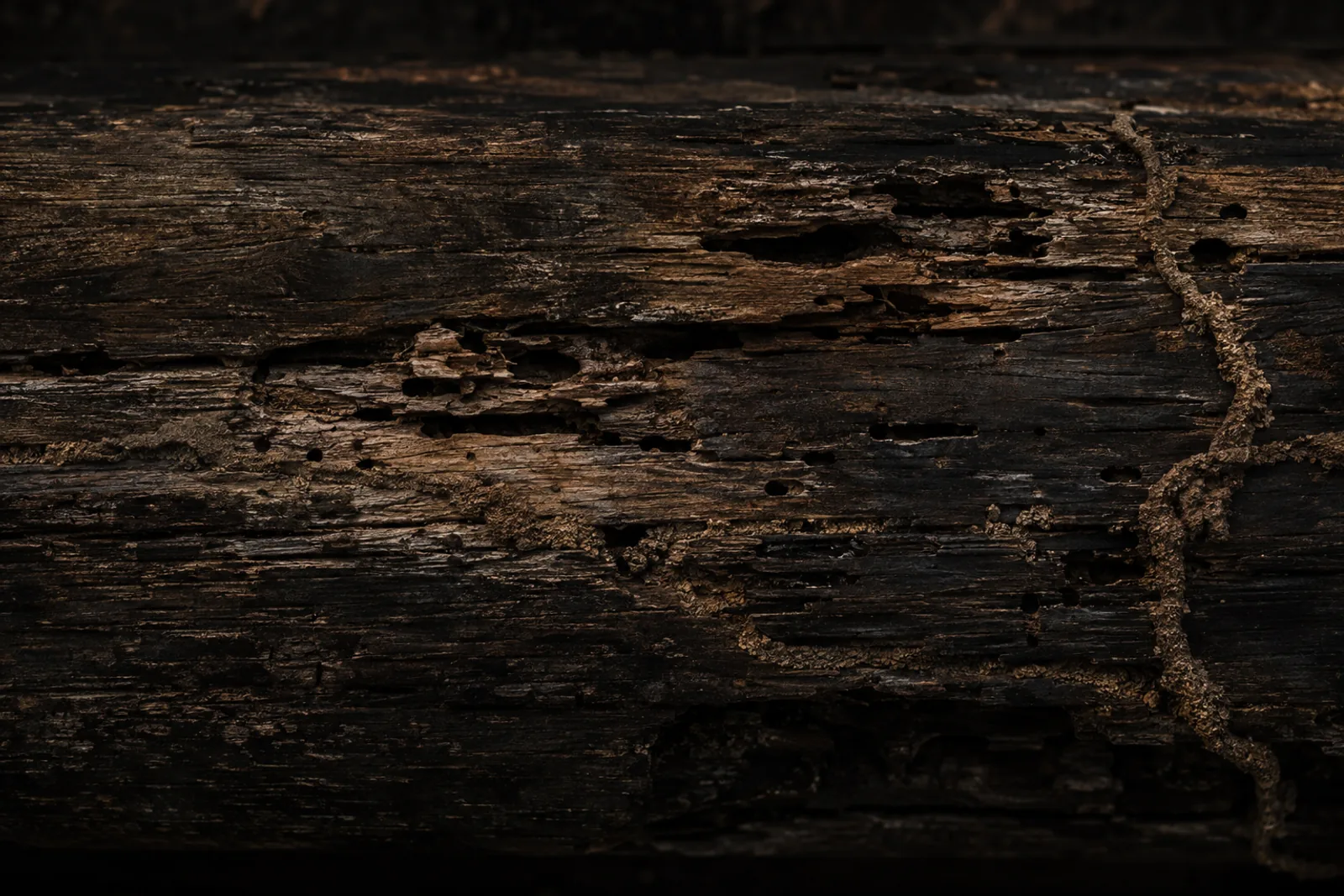
Why termite inspections matter in Melbourne’s Inner West
Melbourne’s Inner West is some of the most termite-friendly ground in the city. The clay soils across Footscray, Yarraville and Seddon hold moisture for weeks after rain, the Maribyrnong River and Stony Creek corridors keep the water table close to the surface, and mature eucalypts along the older streets provide the food source subterranean termites feed on in the wild. Add a century-old housing stock and you have the conditions that Coptotermes acinaciformis, the most destructive termite species in Victoria, thrives in.
The Federation, Edwardian and Victorian weatherboards that make these suburbs so appealing were built on timber stumps over shallow subfloors. Many have had stumps replaced with concrete or steel, but the original bearers and joists are often still there, sitting close to damp ground with limited ventilation. Termites, or white ants as many locals still call them, can enter through a single hairline gap and work inside the timber for years without breaking the surface.
Termite damage is generally not covered by home insurance in Australia. That single fact is the reason a regular inspection is worth taking seriously. The cost of finding activity early is measured in a treatment. The cost of finding it late can be a rebuilt wall, a new floor or a structural repair.
What happens on the day
A termite inspection carried out to Australian Standard AS 3660.2 is a methodical visual inspection of every accessible part of the property. Our inspectors hold the licensing Victoria requires for pest management and follow the same sequence at every home so nothing gets skipped.
Inside the house
We start with the interior, moving room by room. Skirting boards, architraves, door jambs, window frames and built-in cupboards are sounded with a tapping tool and checked with a moisture meter. Termites keep their workings humid, so a localised moisture reading in a dry room is often the first sign of a problem behind the paint. Wet areas such as bathrooms, laundries and kitchens get particular attention because leaking pipes and shower bases create exactly the damp timber termites look for.
Subfloor and roof void
Where there is a subfloor, we go in. This is where most Inner West termite activity starts, and it is the area homeowners never see. We check stumps, bearers, joists and the underside of flooring for mud leads, damaged timber and moisture. In the roof void we inspect the top plates, rafters and ceiling joists, and look for the tell-tale mud packing termites leave when they travel up through wall cavities.
Outside and around the grounds
The external inspection covers the walls, weep holes, slab edges, decks, pergolas, fences, retaining walls, garden beds and any stored timber or tree stumps. Termites almost always come from the ground outside, so understanding the surrounding environment is as important as the building itself. Where access is restricted, thermal imaging or a termite detection radar may be used to check for activity behind surfaces we cannot open.
What your report contains
You receive a written report that sets out what was inspected, what was not accessible and why, and what we found. It includes photographs of any termite activity, damage or conducive conditions, and a clear statement of the risk level for your property. Conducive conditions are the things that make a termite attack more likely: timber in contact with soil, poor subfloor ventilation, leaking taps or downpipes, garden beds built up against weatherboards and so on.
If live termites are found, the report explains your options. In most cases that means a termite treatment to deal with the colony, followed by a discussion about longer-term protection through a chemical barrier or a baiting system. We never treat on the day of an inspection without your agreement, and we do not disturb active termites during the inspection because doing so can push them into another part of the house.
Local knowledge that makes a difference
Every suburb in the Inner West has its own quirks. In Yarraville and Seddon the weatherboards often have enclosed subfloors with vents that have been painted over or blocked by decades of garden growth. In Footscray and Spotswood, converted warehouses and factory sites can hide old timber formwork and buried tree roots under newer slabs. Post-war brick veneer in Altona, Sunshine and Braybrook looks solid, but the timber frame behind the brick is just as edible, and slab-edge concealment by paths and garden beds is a common entry point. The 1990s and 2000s townhouse infill across Maribyrnong and Maidstone was often built with a physical or chemical barrier, but those systems have a working life and many are now well past it.
Knowing what to look for in each building type means we spend our time in the right places and read the signs correctly.
When to book
The Australian Standard recommends an inspection at least every 12 months for most homes, and more often where the risk is high. High risk in the Inner West typically means an older timber home with a subfloor, a property near the river or creek, a home with large gum trees nearby, or a street where neighbours have recently found termites.
Book an inspection if you have noticed any of the warning signs listed above, if you have just bought or are about to renovate, or if you simply cannot remember when the last one was done. A pre-purchase termite inspection is a separate service designed around the sale process, and an annual inspection is the simplest way to stay on top of the risk once you are in the home.
To arrange a termite inspection anywhere in Melbourne’s Inner West, contact us for a free quote. We will ask a few questions about the property so we can allow the right amount of time and bring the right equipment on the day.